A new baby brings a long list of firsts, and the first tooth is one of the most photographed. Good dental habits can start well before that tooth shows up, and the early months are the easiest time to build a routine that lasts.
At Hunterdon Pediatric Dentistry, Dr. Brian Rooney, a Diplomate of the American Board of Pediatric Dentistry, and Dr. Reem Hemantharaju care for infants, children, and teens in Flemington, NJ, and help families start early with preventive care.
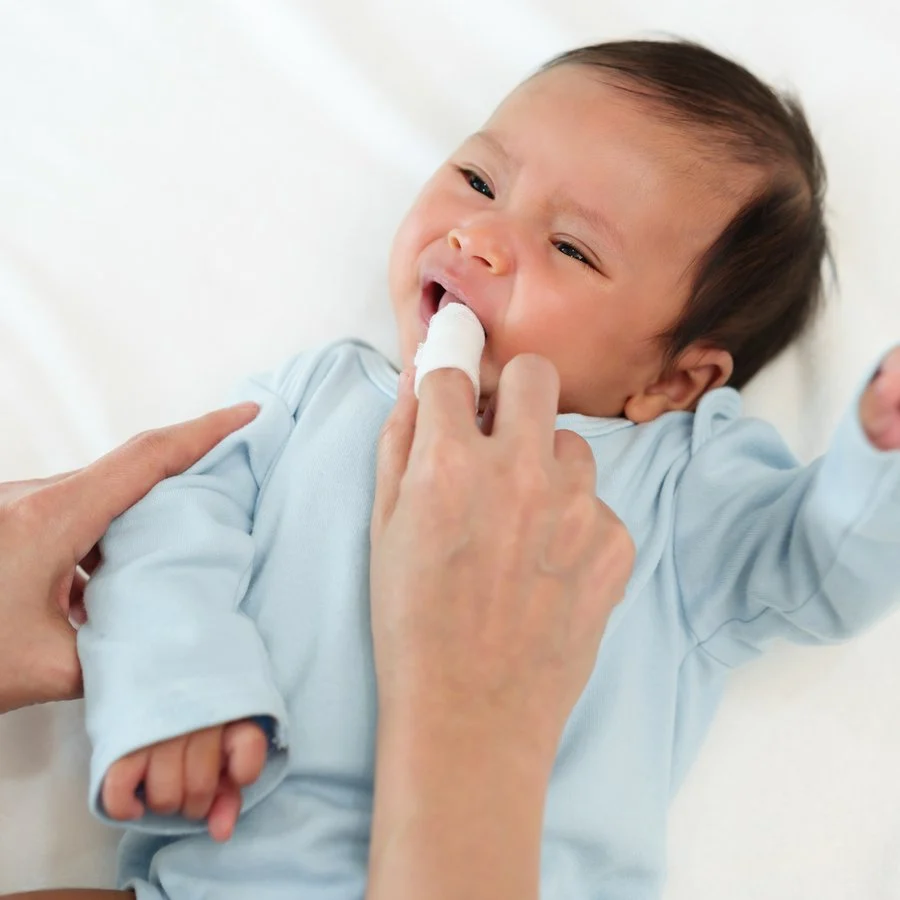
Your baby’s mouth needs attention before any teeth appear. After a feeding, wrap a finger in a clean, damp washcloth or a piece of gauze and gently wipe along the gums. It clears away leftover milk or formula, and it gets your baby used to having someone clean their mouth.
Keep the routine short and calm, and try it at a regular time such as after the last feeding of the day.
Babies are born with 20 baby teeth already forming in the jaw. According to the American Dental Association, they usually start to come in at about 6 months of age. Every baby keeps their own schedule, so a tooth that arrives a little earlier or later is not unusual.
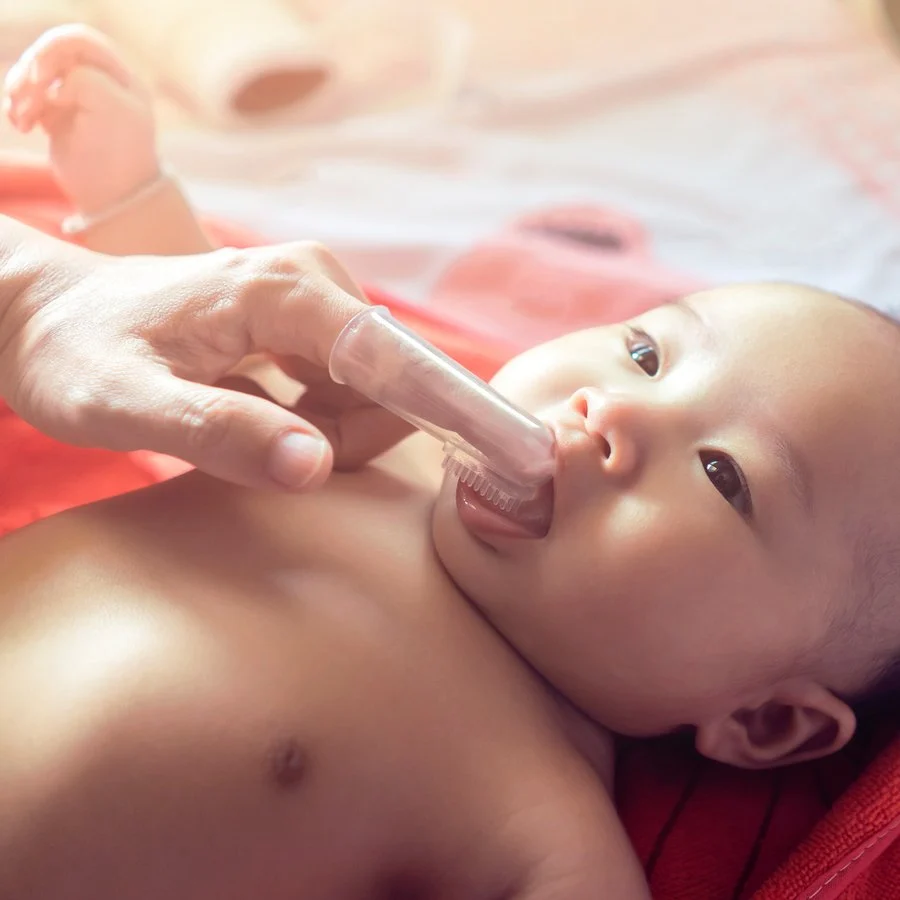
Once a tooth is through, switch from gauze to a soft infant toothbrush with a small head. Dip it in water at first, then move to toothpaste as described below. During teething, many babies want to chew on everything within reach, and that is a normal part of the process. If your baby resists the brush, go back to the washcloth for a few weeks and try again.
The right amount of toothpaste changes as your child grows. The American Academy of Pediatrics gives these guidelines for brushing.
Use a smear of fluoride toothpaste about the size of a grain of rice, and brush at least twice a day, after breakfast and before bedtime. You do the brushing at this stage.
Switch to a pea-sized amount of toothpaste, and begin teaching your child to spit it out without rinsing. Keep brushing alongside your child.
Stay close and help or watch while your child brushes. The AAP says this is usually needed until around age 10. Our page on fluoride explains how it protects growing teeth.
If you are not sure how much toothpaste to use or whether your baby is swallowing it, ask at your next visit and we can show you.
What and how a baby drinks affects teeth from the moment they come in. A few habits make a big difference.
The AAP advises against putting a baby to bed with a bottle at night or at naptime. If your baby needs a bottle at bedtime, fill it with water only.
Skip sweetened drinks and juice in a baby’s bottle. Milk and formula have natural sugars, so cleaning your baby’s teeth and gums regularly still matters. Our nutrition and oral health page covers more on what helps and hurts.
Never dip a pacifier in honey, sugar, or anything sweet. If your child uses a pacifier or sucks a thumb, read about thumb sucking and pacifier habits so you know when to start weaning.
Both the AAP and the American Academy of Pediatric Dentistry recommend a first dental visit by a child’s first birthday, or within about six months of the first tooth. A tooth can develop a cavity soon after it appears, so waiting for a problem means missing the easiest window to prevent one.
At the first visit, our team looks at your baby’s mouth, answers your questions about feeding, brushing, and teething, and shows you how to clean your baby’s teeth. A calm, positive attitude from you helps your child feel at ease, and our dental exams and cleanings can grow with your child from that first visit on.
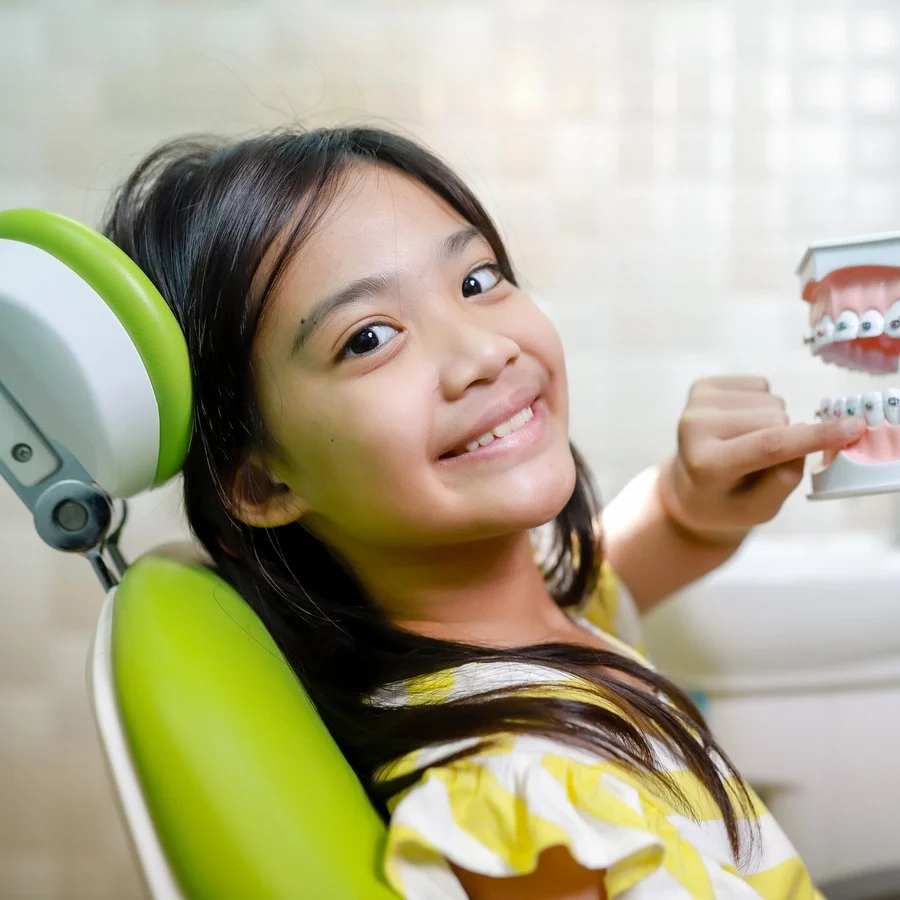
Parents often arrive with a dozen questions and forget half of them in the room. A short list helps you make the most of the visit.
Write down anything else that comes to mind before you arrive, and bring any notes from your child’s pediatrician.
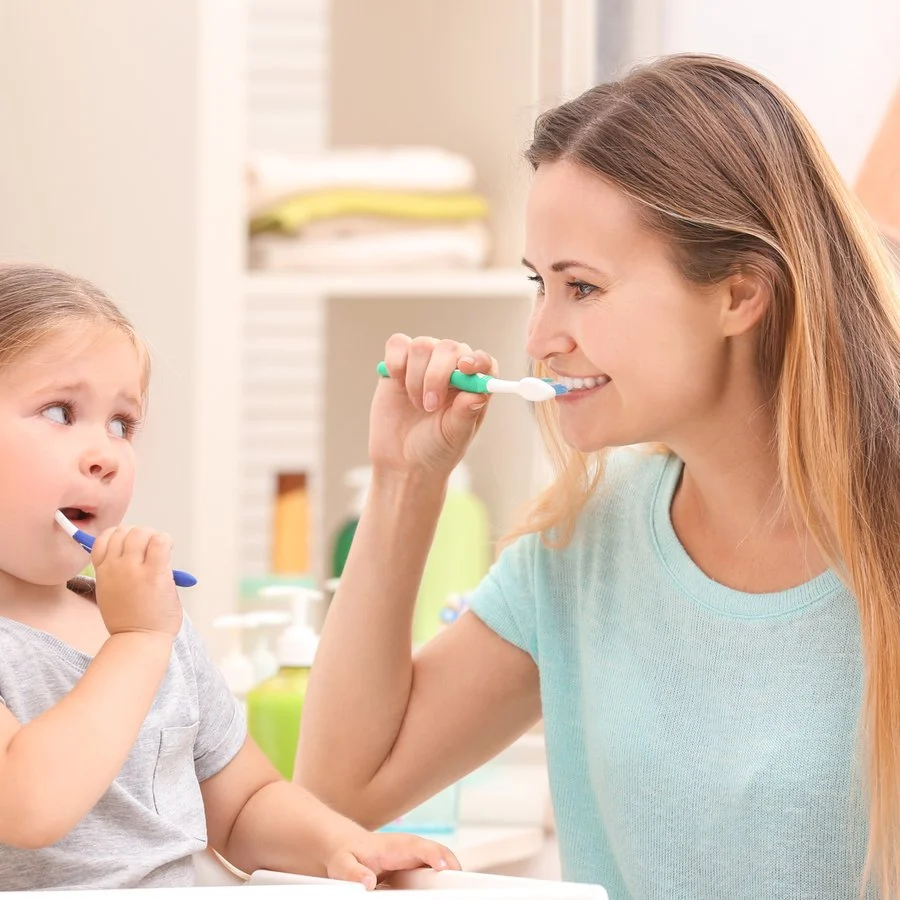
Little ones learn by watching, so let your child see you brush and floss each day. As soon as your toddler shows interest, offer a toothbrush of their own with a short, chunky handle that is easy to grip, and let them “brush” beside you before you finish the job.
To keep it fun, try a favorite song, a toothbrush with a character on it, or a brushing chart. The goal is a habit your child accepts without a fight. Our page on why baby teeth matter explains why these early habits are worth the effort.
The AAP and the AAPD recommend a first visit by your child’s first birthday, or within about six months of the first tooth coming in.
After feedings, gently wipe the gums with a clean, damp washcloth or a piece of gauze. It removes leftover milk or formula and builds a routine.
According to the ADA, baby teeth usually start to come in at about 6 months of age, though the timing varies from baby to baby.
From the first tooth to age 3, use a smear of fluoride toothpaste about the size of a grain of rice. At age 3 and older, use a pea-sized amount and teach your child to spit without rinsing.
The AAP advises against it. If your baby needs a bottle at bedtime, fill it with water only, and avoid sweet drinks.
Yes. Our dentists care for infants, children, and teens, and we welcome babies for a first visit.
Dr. Brian Rooney is a board-certified pediatric dentist and a Diplomate of the American Board of Pediatric Dentistry who completed a two-year pediatric dental residency at UCLA, where he served as chief resident. Together with Dr. Reem Hemantharaju, who earned a pediatric dental specialty certificate from Columbia, he welcomes all children and adolescents to our Flemington office, including those with special needs.
If your baby’s first tooth has arrived, or your child is close to turning one, our team can check how things look and show you how to care for those first teeth. We accept insurance and fee-for-service, with Cherry and CareCredit payment plans available, so reach out through our appointment request form to schedule a visit.