A fall on the soccer field or a stray elbow during a basketball game can chip, crack, or knock out a tooth in a split second, and a damaged permanent tooth may need dental care for years. A well-fitted mouthguard is one of the simplest ways to lower that risk, but the best choice depends on your child’s sport, age, and mouth.
At Hunterdon Pediatric Dentistry, Dr. Brian Rooney, a Diplomate of the American Board of Pediatric Dentistry, and Dr. Reem Hemantharaju help young athletes in Flemington, NJ protect their smiles as part of our preventive care. Our team can talk with you about mouthguard options for your child’s sport and check the fit at every visit.
Most families think of football, hockey, and lacrosse, and those are the sports where high school and college rules require a mouthguard. High school wrestlers who wear braces must wear one as well. The American Dental Association recommends a mouthguard for many more activities. Its list of contact and collision sports includes basketball, soccer, boxing, martial arts, rugby, handball, water polo, and wrestling, and its list of limited-contact activities includes baseball, softball, gymnastics, volleyball, skateboarding, inline skating, skiing, surfing, bicycling, weightlifting, and equestrian events.
Sports without a mouthguard rule can still put teeth at risk. The ADA points out that dental injuries are common in non-contact and high-speed activities such as gymnastics and skating, and one study it cites found basketball players had the highest rate of dental trauma among the college athletes studied. A useful question to ask is whether your child could fall, collide with another player, or take a ball or stick to the face. If the answer is yes, a mouthguard is worth considering, and our team can talk with you about sports dentistry for young athletes.

A mouthguard works as a cushion between the teeth and whatever hits them. It helps absorb and spread out force, and it also helps protect the lips and cheeks from soft tissue injuries. According to a 2019 review summarized by the American Dental Association, dental trauma showed up in roughly 48 to 59 percent of contact-sport athletes who skipped a mouthguard, compared with about 8 percent of those who wore one.
Mouthguards are less proven for concussions. The ADA notes that research on that question is mixed, so think of a mouthguard as protection for the teeth, lips, and jaw rather than a replacement for helmets or face protection. The American Academy of Pediatric Dentistry, which last revised its sports injury policy in 2023, encourages dentists to prescribe, make, or refer families for mouthguards for children at higher risk of mouth injuries. It also calls for ASTM-certified face protectors for youth baseball and softball players.
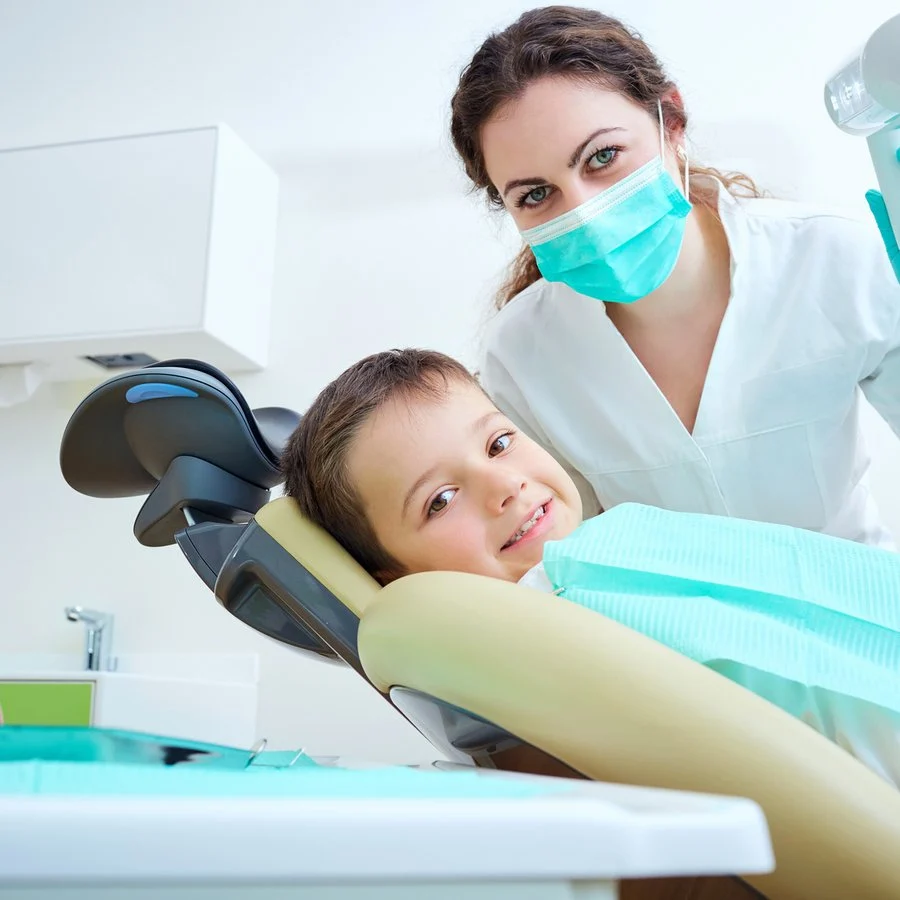
Mouthguards come in three kinds, and where you get one largely decides how closely it fits your child’s mouth. Each type has benefits and drawbacks, so the right pick often comes down to your child’s sport, how often they play, whether they wear braces, and your budget.
A custom mouthguard is made from impressions of your child’s teeth, so it is shaped to fit that mouth, and Dr. Rooney can make a custom athletic mouthguard when your child needs one. The ADA describes custom guards as offering the best fit and adaptability, and many dentists consider them the most protective choice. The drawbacks are cost and time, because a custom guard is the most expensive option and needs a dental visit for fitting. A dentist can also design a guard that works around braces and other appliances.
Boil-and-bite guards are sold at sporting goods stores. You soften the guard briefly in hot water, then your child bites into it to shape it. These guards cost less than custom ones and usually fit better than stock ones. The main warning is that the fit depends on following the package directions closely, because overheating or rushing the molding can leave a loose or uneven fit. Look for a product with the ADA Seal of Acceptance, which means the ADA reviewed it for safety and effectiveness, and ask our team to check the fit if your child has braces.
Stock guards come ready to wear in a limited range of sizes with no shaping. They are the cheapest and easiest to find, but the ADA considers them the least effective type. They fit loosely, so a child often has to keep the mouth closed to hold one in place, and they may slip during play. A guard that slips or gets pulled out is not protecting anything, so a stock guard is usually better treated as a short-term option than a long-term plan.
A well-fitted store-bought guard that your child wears consistently can still lower injury risk, and the ADA stresses that the best mouthguard is the one that is properly worn during sports. A custom guard may be worth discussing if your child plays often, wears braces, or keeps taking a store-bought guard out because it feels bulky. Whichever type you choose, bring it to your child’s next dental exam so we can check how it fits.
A mouthguard only protects well when it is clean, intact, and still fits, so a little routine care goes a long way.
There is no single expiration date for a mouthguard. How long one lasts depends on how often your child plays, how well it is cared for, and whether it is a custom or store-bought model. Children’s mouths also change quickly. Baby teeth fall out, new teeth come in, and jaws grow, so a guard can stop fitting well before it looks worn out. A good habit is to check the fit at the start of every sports season and bring the guard to each dental visit.
Replace the mouthguard if you notice any of these signs.
If you are unsure whether a guard still fits, our team can take a look at your child’s next visit.
Have your child brush before putting the guard in, then rinse it in cool water or clean it gently with a toothbrush and soap or toothpaste after each use. Keep it in a sturdy case with air holes and away from heat, because hot water, direct sun, or a hot car can warp it. Remind your child not to chew on it, trim it, or share it, and never to wear a retainer at the same time as a mouthguard.
Rules vary by league and school. High school and college rules require one in football, field hockey, ice hockey, and lacrosse, and for high school wrestlers with braces. The ADA recommends them for many other sports, including basketball, soccer, baseball, and gymnastics. Tell our team about your child’s sport and we can talk through the options.
Both can work, with different tradeoffs. A dentist-made guard offers the best fit and is often considered the most protective, but it costs more and takes a visit. A store-bought boil-and-bite guard costs less and is available right away, and an ADA-accepted product is a reasonable choice for many children. A stock guard fits loosely and is the least effective. If your child has braces, ask a dentist before you buy.
It depends on how often your child plays, how the guard is cared for, and how fast your child’s mouth is changing. Check the fit at the start of each season, and replace the guard when it is loose, torn, or uncomfortable, or when new teeth or braces change the fit.
Yes, and children with braces should wear one for sports. A dentist can help choose or design a guard that protects both the teeth and the braces. Avoid wearing a retainer at the same time as a mouthguard.
Coverage for mouthguards varies by plan, and our financial information explains the insurance and payment options available, including Cherry and CareCredit.
Contact a dentist right away, because a broken or knocked-out tooth needs prompt attention. Our guide to pediatric dental emergencies explains what to do before you can reach us.
Dr. Brian Rooney is a board-certified pediatric dentist and a Diplomate of the American Board of Pediatric Dentistry who completed a two-year pediatric dental residency at UCLA, where he served as chief resident. Together with Dr. Reem Hemantharaju, who earned a pediatric dental specialty certificate from Columbia, he welcomes all children and adolescents to our Flemington office, including those with special needs.
Whether your child is starting a new sport, outgrowing last season’s guard, or getting braces, we can talk through whether a custom athletic mouthguard or a store-bought option makes sense for their mouth and sport. We accept insurance and fee-for-service, with Cherry and CareCredit payment plans available, so reach out through our appointment request form to schedule a visit.